Blog Details


November 25, 2026

5 min read

To keep pipes from freezing in an empty Park City home, keep the heat on, never set the thermostat below 55°F, and make sure someone checks the home regularly. Protect the most exposed pipes in crawlspaces, garages and exterior walls, know where your main water shutoff is, and add sensors that alert you if the temperature drops or water appears where it shouldn't. The goal is simple: warm air needs to reach every pipe, and someone needs to know quickly if the heat stops.
Below, we cover the right thermostat setting, the parts of a mountain home most likely to freeze, when to shut off the water, and the technology that can warn you before a frozen pipe becomes a flooded basement.
Park City sits at roughly 7,000 feet, and winter nights regularly drop well below freezing. Research from the University of Illinois Building Research Council found that pipes in unheated or poorly insulated spaces start to be at risk when the outdoor temperature falls to about 20°F. In Park City, that happens often.
An occupied home has people noticing a cold room, a slow faucet or a furnace that sounds wrong. An empty home has no one. If the power goes out or the furnace quits, the temperature inside can fall for days before anyone knows. When a frozen pipe thaws and splits, the water keeps running until someone shuts it off.
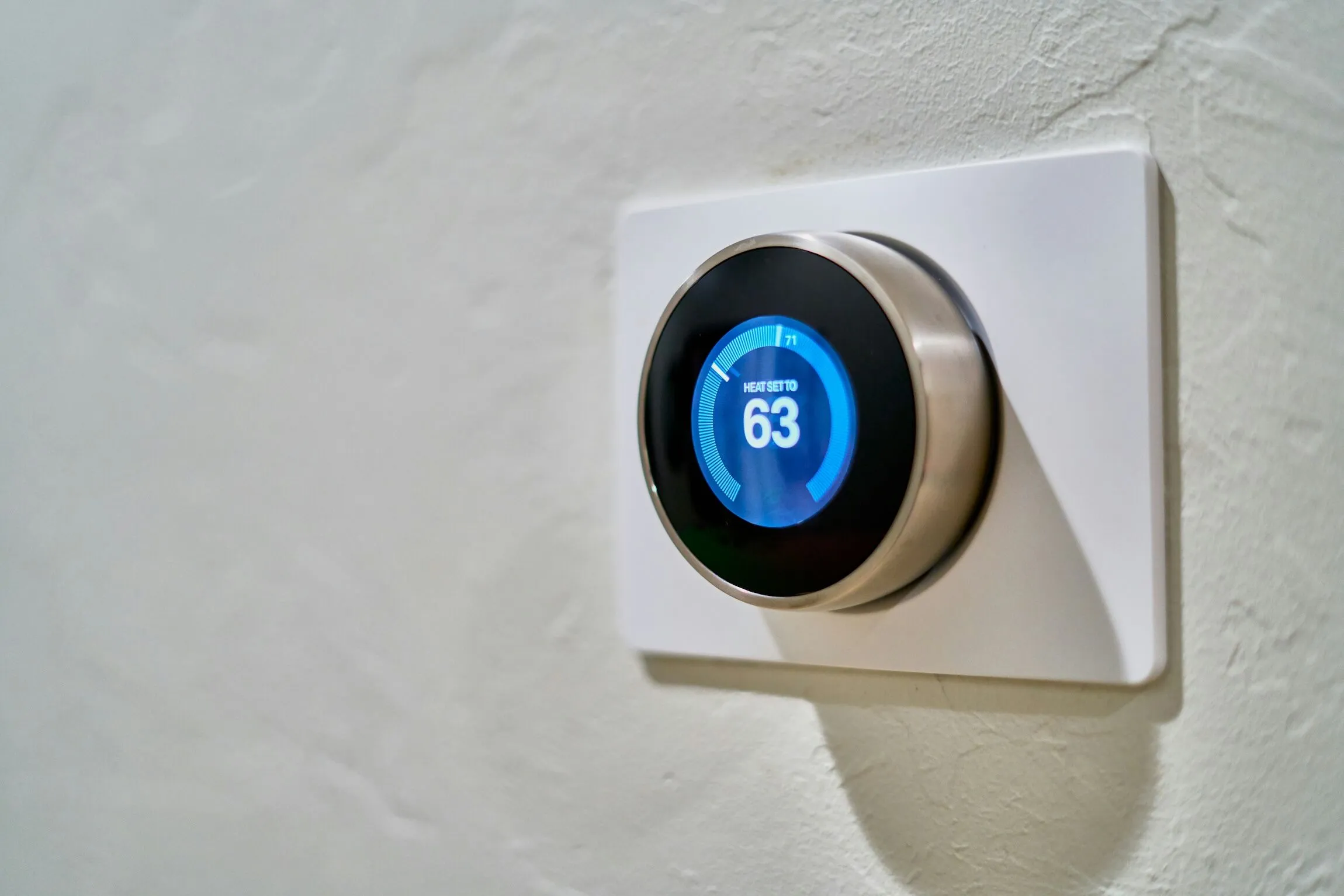
The American Red Cross recommends keeping the thermostat no lower than 55°F when you're away during cold weather. For a vacant home in a mountain climate, many owners choose a few degrees higher for extra margin, especially if the home has rooms over garages, long plumbing runs along exterior walls, or areas the furnace struggles to heat.
A few points matter as much as the number itself:
Frozen pipes rarely happen in the middle of a warm room. They happen where cold air reaches the plumbing and warm air doesn't. In Park City homes, check these areas first:
Pipe insulation, sealing gaps where cold air gets in, and heat tape on lines that can't be kept warm another way all help. A plumber can tell you which lines in your home are most exposed.
Shutting off the main water supply limits how much water can escape if a pipe does break. For a long absence, it's worth considering. Before you do it, check a few things:
Even if you leave the water on, an automatic shutoff valve (more on those below) can close the supply for you the moment a leak is detected.
Technology can't replace someone walking through the house, but it can shorten the time between a problem starting and someone knowing about it.
One caution: many of these devices rely on Wi-Fi and power. If a storm knocks out the power, the furnace stops and so can the alerts. Battery or cellular backup, and someone local who knows to check the home after an outage, close that gap.
Sensors tell you something has gone wrong. Regular walk-throughs catch the conditions that lead to it: a furnace filter that needs changing, insulation that has slipped, a draft near a crawlspace vent, a vent buried by a snowdrift. That's the work Sea to Ski's team does every week for homeowners while they're away, along with checking in after storms and responding around the clock when something does go wrong.
If you'd like someone keeping watch on your home this winter, send us a message and we'll walk you through how we care for homes like yours.
The American Red Cross recommends no lower than 55°F. In a cold mountain climate like Park City, many owners set it a few degrees higher for extra margin, especially in homes with exposed plumbing or rooms that are hard to heat.
Pipes in unheated or poorly insulated areas can start to freeze when outdoor temperatures drop to around 20°F, according to research from the University of Illinois. Wind, exposure and how long the cold lasts all affect the risk.
Letting a faucet drip helps when you're home, because moving water is less likely to freeze. In a vacant home, it isn't a reliable solution on its own: a drain can freeze or clog, and no one is there to notice. Keeping the heat on and having the home checked regularly is the better approach.
Have someone shut off the main water supply right away, then call a plumber. If water has reached the ceilings or walls, turn off power to the affected areas and document the damage for your insurance company. This is where having a local home manager with access to your home matters most.
It depends on your policy. Some policies have conditions for homes left unoccupied, such as keeping the heat on or having the home checked regularly. Review your policy before you leave for the season, and ask your agent if you're unsure.
OUR STORY